Monday, October 28, 2013

Absolute Beginners: You want me to wear what? Spandex!

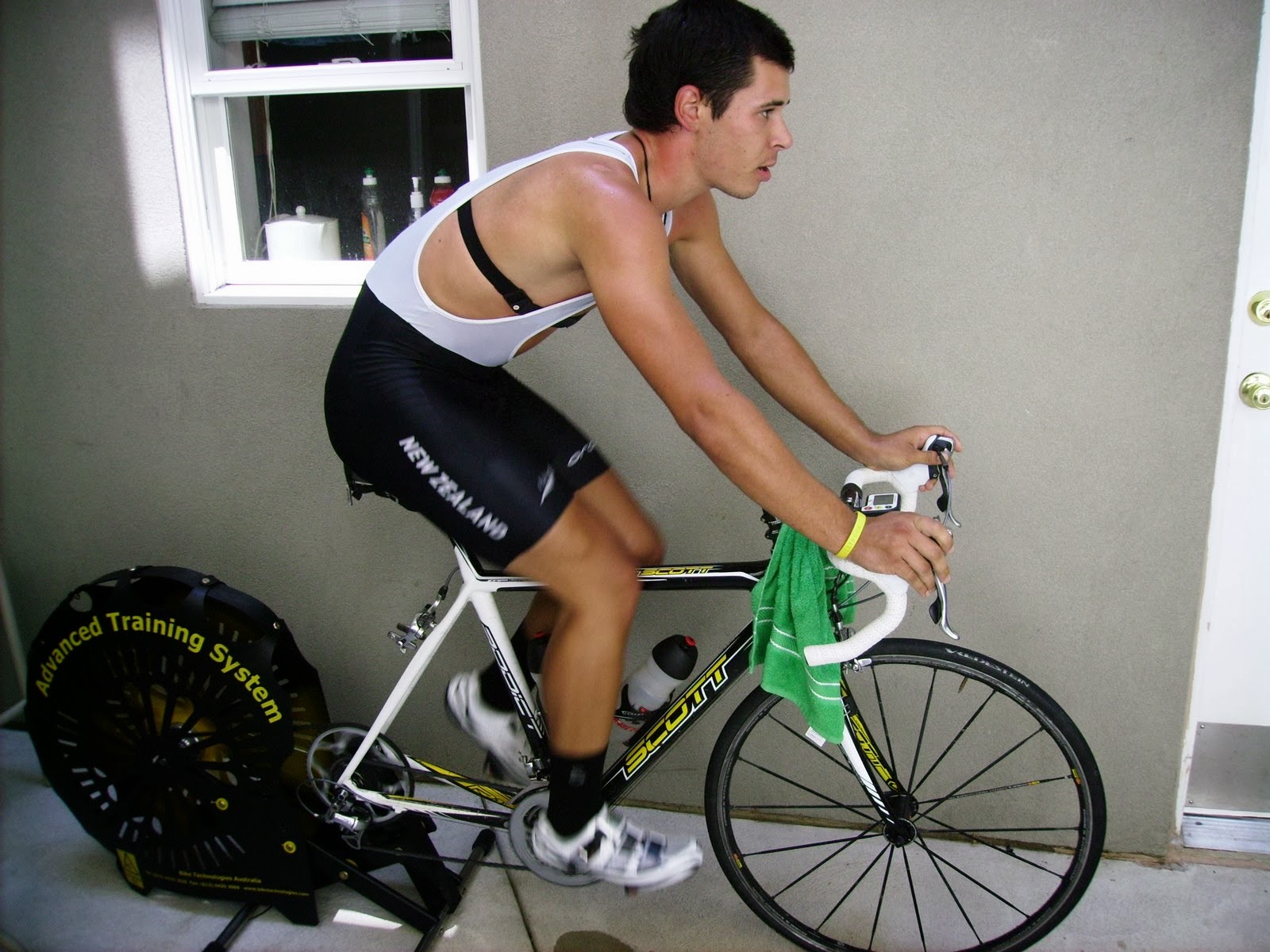
New cyclists often complain about cycling clothing, refusing to wear it: It's expensive and pretty much useless for anything else. Its ugly. Its not flattering. It exposes my junk. After a while, it smells. It makes me look like a dork.

All valid, criticisms but in the end, even vociferous spandex naysayers will, eventually, wear cycling clothing. Why? Because it is supremely functional for long distance riding.


Here are a few reasons:

1. Tight fitting clothing doesn't bunch up and cause sores.

All cyclists eventually get "saddle sores," or skin irritation in the crease between the buttock and the thigh. Though there are many causes of saddle sores, one cause is poorly fitting bike shorts, or bike shorts with stitching in the wrong place. The folds of fabric or stitching can rub the skin, causing it to become raw, then native bacteria can infect it, causing angry, itching sores which make riding unpleasant.

To avoid saddle sores, begin by keeping a smooth layer between your buttocks and the saddle. Experiment with lubricants: vaseline (which is thick and so works well, but is difficult to remove from the cycling pad), chamois butter, or even silicone-based lubricants, or none at all.


2. Cycling shorts have the padding you're missing from the saddle.

In my entry on cycling seats, I recommended the smaller, compact saddles used frequently by cyclists. Such saddles help avoid saddle sores, are lighter, and allow free leg movement. But you still don't want your sit bones resting on a hard surface. So where does the padding go? In the cycling shorts, of course! And that is why those pads are in there.
Thor Hushovd. Image Credit

3. Cycling clothing is purposefully light weight and fast drying.

A pair of cotton shorts can weigh about a pound, but a typical bike outfit can weigh much less than a pound! The less you have to push up that hill, the more achievable it is.

Cycling involves sweat. Lots of it. But it also involves varied environmental conditions. Unless that sweat can escape, its going to build up in your clothing, weighing you down, causing to to overheat while exercising and to get chilled when at rest, and its going to start to stink. But cycling clothing is designed to dry quickly even while exercising, minimizing the build up of moisture. And being dry is so important while riding!

4. Many styles of cycling clothing are convertible.

Rides are often long. They can take from 2 hours for a 30 mile ride to 8 hours for a 100 mile ride. Thus, rides often start early in the morning when its cold and damp. The sun rises and so do the temperatures. Or the ride up hill is sunny and hot, while the descent is cold and shaded. Or half way through a lovely ride, the wind kicks up and it starts to drizzle.

So, for every ride, you need to be prepared for multiple riding conditions. Cycling clothing can help. For instance, you can purchase extremely light-weight Goretex jackets which block the wind and keep you surprisingly warm, but which can pack up small enough to fit into your jersey pocket. You can purchase insulated cycling sleeves and leggings which can be pulled up or down while you're riding.

There's a good outfit for every condition. Check the weather and be prepared.

5. Layering adds warmth without significant weight.

If you know that its going to be a cold day, you may be tempted to don a thick sweater, down jacket, or other rain coat. But if properly layered, cycling clothing can achieve comparable warmth without the bulk.

On cold days, I typically wear a base layer (often lycra or wool) under my jersey. Sleeves of various insulation depending on the forecast. A jersey. A Goretex jacket — I have a very thin one and an insulated one — depending. Cycling shorts, also of varying insulation. Gloves of various insulation levels (or two pair of gloves woolen under fingerless). And insulated leggings. I can take things on or off as needed.

On my feet on cold days, I'll wear woolen socks and water resistant, insulated toe covers over my shoes.

6. If cared for properly, cycling clothing lasts a long time.

All this clothing is expensive. I probably have $2,000 or more in cycling clothing. But if kept clean and dry, it can take years to wear out. The most expensive pieces — Goretex and insulated — often will last for many years because they are the least used in California.

7. You get used to the odor.

Sadly, spandex has a tendency to retain odors. Its never pleasant, but its worth it for the thrill and fun of cycling. Wool retains less odor, so try wool garments, too.

I hope this helps. If so, consider donating $5 or more to my ALC ride. Click "Donate," above.

Love,
Your Bear

Over the next couple months, I'm going to write a few articles with the lead-in title "Absolute Beginners," explaining some of the basic principles of cycling. Most of the information is stuff I've learned from other cyclists, bike shop mechanics, classes I've taken, and Google searches. Please help me out and comment with corrections, additions, or supplements which will help my readers learn about how to operate their bikes!

Friday, October 18, 2013

Absolute Beginners: Handlebars and Control

On a road bike, the handlebars are the place where you rest your hands, part of the load distribution between front and rear wheels, the location of the bicycle controls for brakes and shifting, and integral to steering.

This post answers two general questions. First, why do long distance cyclists usually choose road bicycle handlebars? Second, what role do the handlebars play in controlling the bicycle?

1. Why do Long-Distance Cyclists Choose Road-bike Handlebars?

As with every other part of your bicycle, there are a number of choices you can make in handlebar style:
Figure A.1: Typical Road Bicycle Handlebars. Image Credit.
Figure A.2: Road Bicycle Handlebars with Brakes and Shifters. Image Credit.

Figure B: A more relaxed handlebar configuration. Image Credit.

Figure C: Mountain Bike Handlebars. Image Credit.
If you read the Wikipedia entry on bicycle handlebars, you will see over ten identified styles of handlebars. But as you do the ALC, you'll notice that the vast majority of riders use the type shown in Figure A.1 and A.2. As we'll explore in future posts, road bicycles provide a smaller contact to the road, give you a less-upright position, and give you the opportunity to distribute your weight relatively evenly between the handlebars and the saddle. These features exist, in part, because in road cycling, you may spend extended lengths of time in, essentially, one position.

Figure D: Parts of the Handlebars.
Handlebars are a tube of metal (or carbon fiber) intended to accommodate your hands as comfortably as possible. They're tubular and not solid to cut vibration, because tubes are lighter, and because they are stronger for this application. Some features of the road bars in order to accommodate the specific positions your body takes in road cycling are: multiple grip points, controls accessible from most of the grip points, and tape covering the entire bar. See Figure D for the names of the parts of a handlebar (not every bike will have this exact configuration).

These features provide two primary benefits for road cyclists:

  • Multiple hand placements during a ride. Allows:
    • Altered placements during long rides to avoid cramping and discomfort, generally.
    • Use of the top of the handlebar during ascents.
    • Use of the hoods during the bulk of the ride.
    • Use of the drops during descents.
    • Quick access to the brakes and shifters from each placement.
  • A neutral hand position in each placement (meaning the wrists are in line with the forearms). This puts the least amount of strain on the wrists and forearms, and should help alleviate numbness and pain.

a. The Hoods.

You'll spend most of your time with your hands engaged in the hoods. What that means is the crook between your thumb and forefinger will be pressed against the plastic portion (hood), your thumb will be crooked over the hood, and your other fingers will be wrapped around the hood and below it on the hook. In this position, you can easily open your fingers to use the brakes and shifters. Your grip should generally be firm but light (not a death grip), but should affix your hand firmly to the bar. (That way if you hit an unexpected bump, your hand doesn't fly off.)

b. The Top and the Drop.

From your standard position in the hoods, you'll move your hand — still firmly wrapped around the tube — to the top when on long ascents, to give your hand a break, or to drink from your water bottle. This position is furthest from the brake levers, so keep your eye on the road and be prepared to move to the drops if necessary.

You'll move your hand to the bottom of the hook or the drop on long descents, to give yourself a more aerodynamic seating posture, and to give your hand a rest. Riding in the drops can be challenging for new riders, so get used to it on flats or very gradual descents before trying it on steep descents. You can brake or shift from the drops, so practice that as well.

c. Neutral Wrist Position.

A primary complaint riders have is that their hands, fingers, forearms, and beyond get numb with longer rides. Part of the solution is to maintain a neutral wrist position — meaning your wrists are in the same plane as your forearms and palms.

Figure E: Not a perfect position. Image Credit and Details.
Figure E shows a cyclist with a fairly good wrist position. Notice that his palm is not flexed. But also notice that the line of his hand is bent relative to the line of his forearm. A good position, but he could do better (read the discussion for details). For a good understanding of neutral wrist position, see Figure F.

Figure F: Ideal Neutral Wrist Position. Image Credit.
I used to grow numb on long, flat rides, but not on hilly rides. For me the resolution was a bike fit. The fitter swapped out my stem and handlebars to bring the controls closer to my body and to narrow the handlebars to prevent strain on my shoulders, too. That and seat adjustments completely eliminated numbness and most soreness.

If you have a bike fit, your fitter may alter the geometry of the bars. You may get a shorter stem (the component which attaches the handlebars to the frame. You may get a tighter or shorter hook to place the drops closer to your body. You may get a narrower handlebar to keep your wrists in a neutral position. Or the fitter may simply adjust the angle of the bars to the frame.

2. What role do the Handlebars Play in Bicycle Control?

Just to state the obvious: handle bars are not a steering wheel. Bicycles are not controlled by wrenching the handlebars from side to side, but instead by more subtle movements of the body. That being said, bicycles turn the way they do because the front wheel is free to move from the plane of the rest of the bike. So, what role do handlebars play in steering?

Mainly, the handlebars are used in a maneuver called countersteering. A full discussion of countersteering will be the subject of a future blog post, but see my prior posts about cornering. The gist of countersteering is that rather than pulling your handlebars to the right to complete a right turn, you gently press on the right handlebar causing the bike to lean to the right — counter to the pressure. In cycling, however, you use your whole body to give the bike that gentle pressure to the left, rather than just the handlebar (which is somewhat different that in motorcycling).

In a future edition of Absolute Beginners I will walk you through a complete turn.

Love,
Your Bear

Over the next couple months, I'm going to write a few articles with the lead-in title "Absolute Beginners," explaining some of the basic principles of cycling. Most of the information is stuff I've learned from other cyclists, bike shop mechanics, classes I've taken, and Google searches. Please help me out and comment with corrections, additions, or supplements which will help my readers learn about how to operate their bikes!

Wednesday, October 9, 2013

Absolute Beginners: The Saddle and Seating

The first three posts in my Absolute Beginner's series are about the body-bicycle interface: pedals, saddle, handlebars. This week, I write about the saddle or seat.
Figure A. Parts of a Bicycle. Image Credit (with more detail).
Your saddle is much more than a comfy place to put your butt while enjoying the scenery. Instead, it's an integral part of how you operate the bicycle.

1. Choosing a saddle shape.

Just like nearly every other component, there is a range of saddle types, depending on the type of bike and the shape of the rider. (Here's an extensive summary of bicycle saddles and their various parts.)

Figure B1. Classic Saddle. Image Credit.
Figure B2. Touring Saddle. Image Credit.


Figure B3. Road bike Saddle. Image Credit.
Walking around cycling shops, you'll notice many different saddle shapes and sizes. New cyclists may be tempted to choose a large, broad, soft or springy model. But there's a reason why road bike saddles are shaped as they are.

When you ride long distances, a larger saddle may chafe your inner thighs and a softer saddle provides insufficient support to your sit bones — the point where your butt actually intersects with the saddle. That is why saddles have the narrowed, tapered shape and the broad backside. Here is the problem with larges, squishy saddles simply stated:

Imagine sitting down on a coffee table. Your weight is concentrated on the two bumps of your "sit bones", also known as the "ischial tuberosities." These are the parts of your body designed to bear your seated weight. Most cases of saddle-related discomfort arise because the load is carried on the soft tissues between the sit bones. 
Imagine placing a soft pillow on top of the coffee table. Now, as you sit down on it, the sit bones compress the pillow, which yields until the sit bones are almost on the table surface again. The difference is that now, you have pressure in between your sit bones from the middle part of the pillow. 
In the same way, a saddle with excessively soft, thick padding can make you less comfortable by increasing the pressure between your sit bones. 
Many cyclists are unaware of this, and many saddles are made to appeal to the purchaser who chooses a saddle on the basis of how easily the thumb can sink into the squishy top. 
This type of saddle is only comfortable for very short rides, (though an inexperienced cyclist will often find it more comfortable than a better saddle, as long as rides don't exceed a mile or two.) 
Saddles with excessive padding are also a common cause of painful chafing of the inner thigh, as rides become longer.

(Thank you Sheldon Brown.)

If you find discomfort in your butt or numbness in your privates, you may have the wrong saddle or may have other fit issues. Before spending a lot of money on a series of new saddles, I recommend you get a competent bike fit: "It's the best $300 you'll ever spend to get more comfort and power out of your trusty steed." (not the bike fit you get from a salesperson when you buy the bike).

2. The Butt's Role in Support.

As a new rider, you may have the impression that riding a bicycle means sitting on the saddle, holding on by the handlebars, and pedaling with your thighs. However, that is not the proper way to look at it.

When riding, a good rule of thumb is to start out with about 60% of your weight on the rear wheel (via your butt), 40% the front wheel (via your arms), and shifting these numbers onto the pedals to varying degrees during pedal strokes (via your thighs and legs). Most of the google references on this topic are highly technical and related to racing. But for a new rider, the issue is comfort.

If you put too much weight on your butt, you're going to chafe and you're going to dislike cycling. If you put too much weight on your arms and hands, you're going to get numb fingers and you're going to dislike cycling. Thus, what is important is to keep a healthy balance between the two, attempting to keep everything under as little stress as possible for the maximum amount of time.

3. The Butt's Role in Control.

Steering a bicycle is not as simple as grabbing the handlebars and yanking left and right. There's a full-body motion involved in each and every turn you make. Smaller turns require the more subtle motion, too. This portion of this article will require more detailed explanation, and a quick Google search did not return immediately applicable material.

As I've written before, and will again when I write my article on steering, a good turn occurs when you press on the pedal with your outside foot, inside foot high in the pedal stroke. So, one of the most important roles of the saddle in steering is providing a lever from which to generate the push on the outside foot.

Another important role is when you need to actively lean your bike into a sharp, high-speed turn. More about that in a future post.

4. Why Your Butt Hurts: Changing Saddles may not Fix it.

There are two reasons why your butt may be hurting. First, you may be getting chaffing, which leads to irritation, which leads to infection. Symptoms of this are redness, bumps, pain, swelling, and itchiness. This kind of infection is common among cyclists. Over time, you may become a bit calloused in the creases under your butt cheeks. This is nothing to be alarmed over, so long as you cure any infection before it becomes chronic.

Try using some antibiotic ointment on the infected area (I'm not sure of the efficacy of this treatment, so consult with your doctor). Your physician may prescribe lidocaine to reduce pain and inflammation. Additionally, you may try ibuprofen or acetaminophen to reduce inflammation. Also, experiment with different short materials and styles. The stitching in less-expensive shorts may not agree with your physique.

Consult with your physician if these symptoms occur frequently, persist, or become severe. Otherwise, they are, to some degree, a right of passage for cyclists.

Second, you may experience soreness in your buttocks, thighs, or hamstrings after rides. If these symptoms are bearable and reduce with continued riding, they may be simply a matter of getting used to cycling. If they become worse with time or longer rides, you may need a bike fit.

In fact, if either of these conditions persist, a bike fit might help. Subtle changes in your interface with the bike may alleviate the pressure causing chaffing or causing muscular pain. Only consultation with a professional and testing will help you know for sure.

Love,
Your Bear

Over the next couple months, I'm going to write a few articles with the lead-in title "Absolute Beginners," explaining some of the basic principles of cycling. Most of the information is stuff I've learned from other cyclists, bike shop mechanics, classes I've taken, and Google searches. Please help me out and comment with corrections, additions, or supplements which will help my readers learn about how to operate their bikes!

Sunday, September 29, 2013

Absolute Beginners: Pedals and Pedaling

Bicycles typically come with three basic types of pedals, but pedals can always be upgraded or replaced (this is usually the first upgrade most riders make). The types are:


  1. Plain or "Platform" Pedals (figure 1).
  2. Pedals with "toe clips" (figure 3).
  3. Clip-less Pedals (figures 4a–4c).
Figure 1: Platform pedals

Pedals are affixed to a crank on either side of the bike, each arm 180º from the other. The pedals are attached to the crank by a variable length arm; length determined by bike size, rider size and proportions, and type of crank installed. If you ever have a bike fit, the fitter may well replace the crank arms with longer or shorter arms to accommodate your particular mechanics (that will likely require a whole new crank, by the way, because the crank is usually built in to the front chain ring). (Figure 2.)

The pedals are one of three basic interfaces you have with your bike: the handlebars (for stability and control), the saddle (for your butt, but also for stability and control), and the pedals (for power, stability, and also for control). As you can see, all three interfaces provide control over the bike. As the Absolute Beginners series continues, I'll describe how bicycle steering is generated from the pedals and saddle as much as or more than the handlebars.

To generate power and to keep the bike upright, the rider must keep the chainring moving with the chain engaged, thus powering the rear wheel. The rider generates this power by turning the crank by means of the crank arm. In turn, the crank arm is moved by pressure on the pedals with the feet.

And the primary difference between the pedal types is the efficiency with which you move the crank arm by means of your foot: the more affixed your foot is to the pedal, the more power you get for your effort.

Figure 2: Parts of a crank. Image Credit. Click to enlarge.


1. Platform Pedals

When you first purchase your bike, its likely to be equipped with plain pedals. A rider uses platform pedals the old fashioned way: you simply place the balls of your feet on the top of the pedal and push down with the upper foot, allowing the lower foot to rise with the motion of the crank arm.

Plain pedals represent a low-end in a progression of efficiency. When you cycle with only plain pedals, you get power only when your foot is pressing down on the pedal, not during any other part of the stroke. So any effort made to move your other foot (back and forth and up in the circle representing one bicycle pedal stroke) does not go into your forward momentum.

2. Pedals with Toe Clips

"Toe clips" are cages which affix to the pedal. Special pedals are usually required to install the toe clips.
Figure 3: Toe clips. Image Credit.
Pedals with toe clips represent a step up in the progression of efficiency. They provide two main purposes: first, they position your foot roughly in the best position (ball of foot over the pedal), and second, they affix your foot more firmly to the pedal. Thus, you get power from pushing down on the pedal, pulling up on the pedal, and from the forward motion of your foot in the pedal stroke. So, with toe clips, you'll get power on 3/4 of the pedal stroke over the 1/4 with platform pedals only.

Reason tells us that if you pull your foot back during the pedal stroke, you'll pull out of the clip. Usually, your shoes will have some kind of ridges which will keep your foot on the pedal when you pull back. This final 1/4 of the pedal stroke will not provide as good an adherence to the pedal as the other 3/4. Still, this is light years better than the pedal alone.

Toe-clip pedals have several drawbacks. They are heavier than "clipless" pedals. They provide for a LOT of foot movement during the pedal stroke, decreasing efficiency. They are cumbersome to operate. They are harder to get into and out of than "clipless" pedals. And, believe it or not, they are more dangerous to operate than clipless pedals.

If you chose toe clips, remember: you cannot safely ride with your foot on the non-toeclip side! The toe clip may catch on road debris or surface features, and may cause you to crash.

3. Clipless Pedals

Yes, even though you "clip into" them and "clip out" of them, these babies are "clipless." That is because they do away with the toe clips. And these are the most efficient pedals for cycling. Your foot is fully affixed to the pedal, so you are most likely to get full efficiency out of each pedal stroke.

Here are some different types. SPD offer a smaller interface with your shoe, and are often used for mountain biking. SPD SL offers an easier clip along with a nylon cleat and are often used for road biking:

Figure 4a: Shimano SPD Clipless Pedals. Image credit.
Figure 4b: Shimano SPD SL Pedals and Road Bike Shoes. Image credit.

Figure 4c: Shimano SPD SL Cleats. Image credit.
I can't deny it, clipless pedals are intimidating. But they are also awesome. When you get them dialed-in, you and your bike become one. You are the bike. With clipless pedals comes the maximum possible efficiency. You can get power from 100% of the pedal stroke. And you can feel the difference.

Thus, you will see very few road cyclists riding with anything but clipless pedals. As you progress, you'll want to upgrade to clipless pedals for sure. In fact, most dedicated riders will skip toe clips entirely and jump right to clipless pedals.

Once you decide to take the plunge, there are many manufacturers looking for your business: Shimano, Look, Crank Bros, and Speed Play are all more-or-less common brands. Which you choose is a matter of personal choice. Ask other cyclists which they prefer — you will often find near religious adherence to a brand. Here's a useful buying guide.

You need to practice with these. Ask your sales person or training ride leader to demonstrate how to clip in and clip out. You usually get in by aligning the cleat to the edge of the pedal and pressing with the ball of your foot. You usually get out by twisting your foot and stepping off the pedal. Here's a useful video. You can search YouTube for many other similar videos.

This was a lot of information about a seemingly innocuous part of your bike. But pedals are very important and worth the time thinking about them.

Love,
Your Bear

By the way: Over the next couple months, I'm going to write a few articles with the lead-in title "Absolute Beginners," explaining some of the basic principles of cycling. Most of the information is stuff I've learned from other cyclists, bike shop mechanics, classes I've taken, and Google searches. Please help me out and comment with corrections, additions, or supplements which will help my readers learn about how to operate their bikes!

Thursday, September 26, 2013

Letter to New Riders

I just typed up a letter to a new rider, and I thought it might be useful for other AIDS/LifeCycle Training Ride Leaders. So I'm reprinting it here:

Analisa, 
I'm glad you're coming on your first training ride with us. You've come to the right place. We're here to help you get up to speed on the task at hand — learning the cycling skills you'll need to complete your first AIDS/LifeCycle. 
I cannot tell a lie: you're essentially starting out at sea-level, and you have to climb a huge mountain to achieve your goal: 7 days of cycling an average of 6 hours per day, for a total of 545 miles. But with training and some healthy tips and tricks, you can do it. (Here's my summary of a good training plan: http://bearalc.blogspot.com/search/label/Training%20Plan.) 
The things you need, include: a basic understanding of your bike, an understanding of your body's nutritional needs during a ride, and time in the saddle actually riding. 
Image Credit: The Fixed Gear.
(1) Understanding your Bike: 
Sounds like you can start, stop, and steer your bike, so you've taken the first step toward understanding how to operate your bike. As you attend more and more training rides, the Training Ride Leaders (TRLs) will be able to help you improve how you ride (for instance, teaching you how to steer, use your brakes and gears, and when and how to clean your bike). Please ask questions. 
(Here are a few posts on skills: http://bearalc.blogspot.com/search/label/Skills. I have to write a post about basic skills, I think!) 
(2) Nutrition: 
You'll learn your body's athletic nutritional needs over time. But, I can tell you that just before, during, and after training rides is not the time for a weight-loss diet. Your body needs calories, carbs, sugars, and salt to put out the athletic effort needed to finish a long ride. To that end, be sure you have a healthy meal the night before your first training ride, eat breakfast and don't skimp on the carbs. 
Make sure you have two water bottles on your first ride: one with water, and one with an electrolyte supplement. TRLs will have some spare supplements, probably, and on our nice-and-easy 20 mile ride, you shouldn't have a problem if you forget the electrolytes. 
(Take a look at my blog entry on eating: http://bearalc.blogspot.com/2012/04/eat.html (then click the label "nutrition" for more on the topic).) 
(3) Training and Time: 
Know that training for the ALC is a time commitment. At the beginning of your training (now) a couple hours per week on casual rides will suffice. However, by around the beginning of May, a good, achievable average might be about 8 to 12 hours or more per week of concentrated riding (including hills, longer rides (up to 60 miles or more), and back-to-back days of riding). There is much more to this than I can write in a short paragraph, but without this time commitment, completing the long ride can be difficult. What this means in practice is that coming to our training rides is a great start, but you'll also have to train on your own some times. 
(Why ride long distance? Here's my reasoning: http://bearalc.blogspot.com/2013/01/50-miles-you-must-be-mad.html.) 
All this being said, I want to repeat: YOU CAN DO IT. The AIDS/LifeCycle is like no other experience. From the time of your first training ride, you'll be surrounded by people who want you to succeed. The event itself is fully supported from Day 0 to Day 7. As you do the ride, you'll notice marked support cars, vans, and motorcycles driving by you. The drivers have one goal: your safety. So, even if you find yourself lacking in one area, you know you'll always make it back to camp safe and sound — having ridden every mile, or every mile that you can! 
I'm looking forward to meeting you. Don't forget to RSVP to Saturday's ride on the website: https://actnow.tofighthiv.org/site/SPageNavigator/AIDSLifeCycle/ALC_Calendar. Also, don't forget to join our Facebook page for more encouragement. tips and tricks, and to meet other riders and roadies (https://www.facebook.com/SacramentoAlcTrainingRides).
Regards,
Bear
Please feel free to use this letter as is or modified.

Love,
Your Bear

Monday, September 23, 2013

Nutrition: Its not Magic

Image taken from Tumblr.
Nutrition is one of the primary factors in fun and successful endurance bike rides. Cyclists need to maximize efficiency and reduce fatigue, but also often want to get in many of the other health benefits associated with sport (weight loss, etc.). One thing that no one needs in their diet is magic. And today's magical topic is vitamins.

There is plenty of evidence that vitamins are important for health. For instance, they aid in metabolizing our food — without them, the body cannot absorb nutrients (hence diseases like scurvy and rickets). That fact has led many to grant them divine powers of healing. But the fact is: too many vitamins (through non-medically supervised supplementation) can cause disease and disorder.

That was the finding of two studies reported on in the New York Times:
In a study published in The New England Journal of Medicine in 1994, 29,000 Finnish men, all smokers, had been given daily vitamin E, beta carotene, both or a placebo. The study found that those who had taken beta carotene for five to eight years were more likely to die from lung cancer or heart disease. 
Two years later the same journal published another study on vitamin supplements. In it, 18,000 people who were at an increased risk of lung cancer because of asbestos exposure or smoking received a combination of vitamin A and beta carotene, or a placebo. Investigators stopped the study when they found that the risk of death from lung cancer for those who took the vitamins was 46 percent higher.
Offit, "Don't Take your Vitamins," New York Times (June 2013).

The craze in vitamin supplementation ostensibly started in the '70s when Linus Pauling decided to wander out of his field of expertise and advocate for high-dose vitamin C supplementation. However, his ideas were proven wrong, but not until millions were wasted on unnecessary vitamins.

The conclusion here is: get the facts about supplements before you take them. Don't self-medicate and don't break the bank. Eat a well-balanced diet, high in protein, full of fresh vegetables and fruit, and a decreasing amount of fat and sugar. Get enough calories for the amount you exercise. And visit your physician regularly for checkups and for diagnoses and treatment of unexplained conditions.

Love,
Your Bear

Monday, August 26, 2013

Plan for a Successful Ride

Whether you're riding in the AIDS/LifeCycle, some other multi-day distance event, or just want to improve your cycling, its a good idea to form and stick to a plan. If you're starting to plan now for your June ALC ride, you're smart and can be ready to ride every mile or every mile that you can. As you begin, here is a list of things to think about as you progress through the training season.
Sexy Mustache Riders eating yummy
Pismo Beach cinnamon buns

  1. Time Commitment. A commitment of three sessions per week, increasing in time and duration, will go a long way to the fitness levels you need to ride all 7 days (and most or all of the 545 miles) of the ALC. It will not be enough to attend one ALC training ride per week. As the season progresses, you'll need to up your weekly mileage. (Read about an 8-week program at humankinetics.com.)
  2. The Right Bike. Getting just the right bike can take some planning. Questions to ask your bike shop are: What is the correct size for me? Which components are best for my price range or commitment level? Will I be able to upgrade the pedals or swap out handle bars to get a correct fit? You might want to try out several bikes and get advice from a professional bike fitter before buying.
  3. Bike Fit. If you just bought a bike or if you're riding more on an existing bike, you may still find little aches and pains popping up. If that's the case, you will need to see a professional bike fitter. With minor adjustments based on your proportions and riding style, the professional bike fitter will make your ride more enjoyable and help you to ride longer.
  4. Nutrition and Hydration. You'll need to have water and electrolytes with you on every single ride. That means two water bottles, minimum. Also, as your fitness levels increase, so will your nutrition needs. You will want to make sure you're getting enough calories, and that those calories have the right balance of macro and micro nutrients.
  5. Hills. To be properly prepared for a ride like the ALC, you'll want to make sure you get in significant hill training. Its not enough to ride comfortably on the flats. Nearly every day of the ALC (even the "easy" 40 mile day) has some climbs which challenge even the veterans. (Do you really have to train? Yes. doitforcharity.com.)
  6. Weather. The staff of ALC guarantees that the weather will be mild and sunny, with tailwinds the whole way. And if you believe that, I have a bridge in Brooklyn to sell you. It will be windy. It will be cold. It will be hot. It may even rain. Find the joy in these things, but also prepare yourself for them. This is probably the single most important reason to start training now: its hot and will be cold. If you wait until March, you may miss that experience.
  7. Recovery. With every plan, you need to make sure you build in sufficient recovery time. That is where you build muscle and absorb the lessons you'll learn from training. (Got this idea from Year-long training plan from bycling.com.)
  8. Goals. Unless you know where you're going, its hard to get there. Set achievable goals for speed or distance, and let me help you to achieve them! (Got this idea from Racing cycling plan from cyclingtips.com.au.)
  9. Group and Solo Rides. For fun and safety, make sure you're getting in both group rides and solo rides (even on group rides you may end up spending some time alone, its necessary to be self-reliant. (Tip of the helmet to cycling-inform.com.)
  10. Safety. Learn and know the safety rules for your every day rides and for the AIDS/LifeCycle. Once you absorb them, you'll scoff at those who ignore them. (Learn more at aidslifecycle.com.)
This is a lot to digest. Over the coming weeks, I'm going to blog about preparing yourself for the ride on each of these points. If you think of others, please let me know. Also, peruse my prior entries, as I've hit on most of them. In the meanwhile, I've added a couple sites in the list above with information about training plans; I hope you find them useful.

Love,
Your Bear

Tuesday, August 20, 2013

Become a Ride Leader for the Love of it

At the TRL group photo, ALC 12, 2013.
On Saturday, I re-certified to lead AIDS/LifeCycle training rides along with several other so called veterans. The question posed to us was, why are you returning? My answer was that when I'm out on the road, I'm proud to wear my TRL jersey. It means to me that I'm supporting the LA Gay and Lesbian Center and the San Francisco AIDS Foundation, the riders who make ALC possible, and the image of gay, lesbian, transexual, bisexual, and allied riders and roadies who participate in the event.

Its a way to show that we're members of the community and we deserve love and support. Even as we're making strides to earn that support, we still have a long way to go. Think about the tragic events unfolding in Iran and Uganda, most of the Arab world, and even in Russia. Although we're curing homophobia here in the United States, our public officials often remain unrepentant about their own personal homophobia and ignorant and cruel about the needs of transgendered youth (even California officials).

Yet, speaking out works. Simply coming out decreases homophobia and encourages support for gay rights among non-allies. I've always thought that being out is the single most important thing we can do to support gay rights. I'm not alone. That was the message Harvey Milk presented way back in 1977. Think about how far we've come since then.

That is why I'm a training ride leader. Every time I'm wearing that jersey, the love bubble expands a tiny bit further. One day it will completely envelope California. Then Europe and the US. Then the rest of the world.

Why will you become a ride leader?

Love,
Bear

Monday, August 12, 2013

Magical Diet

Clean, nutritious food is vital to our well-being. It's not shocking that people invest their food with magical properties. The problem is that fad diets are simply not a panacea for all life's ills.
Image Credit, Eliad Cohen.
To look this good, you have to eat well.

Instead, a focus on healthy diet, properly balancing macro and micro nutrients, and enough but not too-many calories is most beneficial. The real magic comes from our bodies' ability to remain healthy and fit from a great variety of foods. What we need to remain healthy is:
Additionally, there's hype about this food or that diet. Most of them are bollocks and not worth the time and energy people devote to them.
The up-side of all these fad diets and food fears is that people are thinking about what they are consuming. They are demanding a wider-variety of nutritious foods with less fat and a better balance of nutrients. The down-side is that clinging to a food or diet as a panacea is magical thinking, which is its own harm.

So, if you're wondering: "What's the harm? I feel like the changes I've made to my diet are beneficial." If you're getting enough nutrients, you're probably not going to hurt yourself physically. But for me, the reasons why we do things are as important as doing them. Choosing a diet because it is emotionally satisfying confuses and annoys me, especially when it is paired with a firm political stance. That stance can influence others who might be at risk from duplicating the choices you've made for yourself.

Those others might choose to treat symptoms identified by the proponents of diet-as-magic, eschewing real medical care. Even once those others get medical advice, the use of a diet may mask the real causes, undermining a doctor's ability to diagnose the real causes. Instead, it's better to focus on getting enough calories including the recommended balance of macronutrients and micronutrients, and visiting a doctor when necessary to diagnose and treat symptoms.

So, eat well, exercise and visit your doctor if you have worrisome symptoms or make a change to your routine. Also, if you're cycling, eat like an athlete!

Love,
Your Bear

Sunday, July 28, 2013

Playing the Numbers: Heart Rate

Photo credit: FratmenJonah
I've really just begun to look at heart-rate training. I know I keep my body in my target heart rate, described below, but I've not begun to maximize my cycling efficiency with heart rate zones. That's the next step, and this preliminary outline is just the beginning. Use it to gain a general understanding of the topic. For a general discussion of this topic for cyclists, read here.

As a preface: just get out and bike. Any amount of doctor-approved aerobic exercise is more likely than not to be beneficial. That being said, you can maximize your workout and make it more safe by
knowing something about heart rate and its effects on exercise.

I. Simple: Resting and Target Heart Rates

The American Heart Association recommends these steps:

A. Determine your resting heart rate.

This you do in bed when you first wake up. You can follow the American Heart Association's instructions, or you can strap on your Garmin and use it to determine your heart rate at rest.

Resting heart rate is unique to each person, so you can't just go by a chart. The average is 60 to 80 beats per minute. Athletes typically have lower resting heart rates, which can be as low as 40. If you're just starting an exercise routine, your resting heart rate can be as high as 100. Your resting heart rate will also increase as you age, so you may have to repeat this step periodically.

This will establish a baseline and help you to determine if additional medical intervention is required before you start a new exercise program.

B. Know your target heart rate range.

For this step, you can use the age-based chart on the American Heart Association's website:


This step will be expanded in the intermediate step, below.

C. Monitor your exercise to make sure you're within your target range.

Then, as you exercise, monitor your heart rate. You can do this for free with a watch and your finger, but a much easier way is with your Garmin (or similar device). The point here is to keep your heart in the range indicated for your age.

I'm between 45 and 50, so my target heart rate is 88 to 149 beats per minute. This represents 50 to 85% of my maximum heart rate (estimated to be 175 beats per minute per this chart).

The point is to slow down if your heart rate goes over the maximum and to increase effort if your heart rate goes below the minimum. Start out slow and increase over time.
During the first few weeks of working out, aim for the lowest part of your target zone (50 percent). Then, gradually build up to the higher part (85 percent). After six months or more, you may be able to exercise comfortably at up to 85 percent of your maximum heart rate. But you don't have to exercise that hard to stay in shape.
Exercising in your target range will maximize fat burning and aerobic activity. You have to keep your heart rate up in the range from thirty minutes three times per week (for minimal results) up to at least one hour every day to achieve real weight loss.

II. Intermediate: Calculating your Maximum Heart Rate

Once you have a good handle on maintaining exercise in your target zone, you can fine-tune those numbers by calculating your personal maximum heart rate, rather than relying on the averages. There are several methods. I'll outline the first one here. Ride With GPS points to Sally Edwards's page on calculating heart rate, which is where I got this information.


The SubMax 1-Mile Walking Test.
Go to any high school or college track (most are 400 meters or 440 yards around) and walk or stride as fast as you can in your current condition. Walk as fast as is comfortable. Walk four continuous laps. 
The last lap is the important one. Take your pulse, or use your heart rate monitor, to determine your average heart rate for only the last lap. The first three laps are just to get you to reach a heart rate plateau and to stay there for the last lap. 
Add to this average last lap heart rate the one of the following that best matches your current fitness level: 
1. Poor Shape: +40 bpm 
2. Average Shape: +50 bpm 
3. Excellent Shape: +60 bpm
This final number (for example, an average 135 bpm last lap plus 60 bpm, because I'm in excellent shape, would equal 195 bpm for me) should be fairly close to your Max HR.

I haven't tried this yet. Anyone willing to do it with me?

III. Advanced: Training Zones

Since I've not even figured out my personal maximum heart rate, I can't say that I'm ready to talk about training zones with any authority. However, I'll lay them out here and leave it for future blog posts to discuss the details.

Basically, each "zone" is a subset of your target heart rate range, plus the range from 80 to 100%. A general description from Bike Radar is:


  • Zone 1 (60-65% of maximum heart rate): For long, easy rides, to improve the combustion and storage of fats.
  • Zone 2 (65-75% of MHR): The basic base training zone. Longish rides of medium stress.
  • Zone 3 (75-82% of MHR): For development of aerobic capacity and endurance with moderate volume at very controlled intensity.
  • Zone 4 (82-89% of MHR): For simulating pace when tapering for a race.
  • Zone 5 (89-94% of MHR): For raising anaerobic threshold. Good sessions for 10- and 25-mile time-trials.
  • Zone 6 (94-100% of MHR): For high-intensity interval training to increase maximum power and speed.

If you follow the AMA guidelines, you'll stay in Zones 1, 2, and 3 for your entire ride. As you can see, generally, this means burning fat and moderately intense exercise. For me, using 180 as my maximum heart rate, these zones are:

  • Zone 1: 108 to 117 bpm
  • Zone 2: 117 to 135 bpm
  • Zone 3: 135 to 147 bpm
  • Zone 4: 147 to 160 bpm
  • Zone 5: 160 to 169 bpm
  • Zone 6: 169 to 180 bpm

Now I know I ride over 147 bpm regularly. For my most recent 78 mile bike ride, I was in Zone 4 for only 11 minutes.


So, what are the advantages of training up to be in higher zones? Without reading more, I can say that training for higher zones increases your capacity to ride in them. This means that you can climb faster and more efficiently. Since climbing is my favorite part of cycling, I'm going to try to increase this number over time.

I'm also going to read more about how to do so, and will report what I learn here. Anyone want to go for a ride?

Love,
Your Bear

Thursday, July 18, 2013

Cycling for Fitness

I've been avidly cycling about 3 years now. I've ridden at least 18,083 miles since 2010 (11,102 on the odometer, and the rest estimated from non-odometer rides) — that's an average of about 115 miles per week. And that's nothing. Some of my friends report having ridden over 5,000 miles just in the first half of 2013 (Joseph Collins, you're my hero)!

I have only one explanation: cycling makes life worth living. It gives me energy; it makes me feel sexy fit and happy; it is good for the environment; and I get to do it with some amazing people. Because of cycling, I have friends all over California who I would otherwise never have met!

Matthew Inman has a 6-part series about why he runs which sums up his reasons in typical pithy Oatmeal fashion: he runs to eat. Though its a bit cynical, I have to say I agree with Matthew. I don't cycle because it will make me look sexy, but because it makes me feel sexy, which is just as important!

All this is to say, JOIN ME on the AIDS/LifeCycle 2014. If you do, I promise to help you get fit enough to complete all 545 miles!

Here's a snippet of the 6-part Oatmeal cartoon. Click the links or the image to read the whole thing (then buy something from his store).


Love,
Your Bear

Saturday, July 13, 2013

Heat Stroke: How to Cycle in Hot Weather

Daily temperatures in Sacramento rarely dip below 90º in July and August — an 80º day is considered chilly here. Recently we've have temperatures pushing 110º, a rarity for Sacramento, but not unheard of. I see a 10 to 15% degradation in my performance when the temperature is above 90. So I'm wondering if there's a way to really chip away at that degradation and get up to 100% even in the hea
t of the summer.

The question is, how do you maintain your training schedule in that heat? Its not easy! There are obvious tips that occur to me off the top of my head:

  • Ride early;
  • Ride at night;
  • Drink plenty of water and electrolytes;
  • Eat salty food;
  • Wear a hat under your helmet and wear plenty of sun screen; and
  • Practice, practice, practice!
...to name a few. Conspicuously off the list is taking breaks, even in the shade. You'll see that moving is key to remaining cool while cycling on a hot day. And that's because moving makes you sweat.
According to the on-line magazine Active, there are four ways your body dissipates excess muscular heat, making prolonged summer cycling possible: "... conduction, convection, radiation and evaporation." Although the article doesn't come out and say it, sweating is the key to each of these. And that means two things: moving and hydration.

Moving increases your exposed skin, aiding radiation. Moving creates its own wind, aiding in evaporation. Moving brings hot fluids from your core to the outside, aiding conduction and convection. Most importantly, moving makes you sweat which then evaporates off your skin — and evaporation is the key to the process:
Sweat is mostly water, and molecules in water are in constant motion. The temperature of water gives us an idea of the average motion of the water molecules. Each water molecule bounces off its neighbors, sometimes gaining energy from the collision, and sometimes losing energy to other molecules. At any given time, however, some molecules carry more energy than others. That is, most molecules will have temperatures close to the average, but some will be much hotter or colder than the average on occasion. 
When water evaporates, some of the molecules fly out of the liquid into the air. Hotter molecules have more energy and are moving around faster, which means that they are more likely to fly away and leave the cooler molecules behind. The evaporating molecules in your sweat actually carry the heat of your body into the air. [From American Institute of Physics.]

The lesson is: taking a break may be necessary if you're fatigued, but its not going to cool you off on a hot day!

Hydration is equally important in this process: you can't sweat if you're dehydrated:
While sweating is necessary to help cool the body, the production of sweat comes at the expense of your body fluids. As much as 1 to 2 quarts of fluid per hour may be lost as sweat while cycling in very hot weather. To help you understand the seriousness of this, the loss of as little as 2 to 3 percent of your body weight due to dehydration can impair exercise performance. [From Active, p2 for additional tips.]
My large water bottles hold 25 oz. each. Since, according to this estimate, I'm losing 32 to 64 hours per hour, I have to drain both water bottle each hour I ride. That's a LOT more water than I usually drink!

So for me, for now, I'm going to try to drink a LOT more water on my hot-weather rides.

Love,
Your Bear

Thursday, July 4, 2013

Getting Back into the Groove

This is the time of year that is most difficult for me to get back on my bike. After a two-week
AIDS/LifeCycle and vacation break, I'm finding other things pulling my interest (not the least of which is work, since I didn't make a penny during my break). Plus its been hot in Sacramento. Today the high is supposed to be 108º F; the fifth day in a row of plus 100 degree temperatures. And for some reason, the humidity has been unusually high, too; right now its 35%.

I've not entirely abandoned cycling. Since June 17, when I got back, I've done three 35 mile rides plus I've ridden to the gym about 10 times (13 miles total each time). Still, it doesn't feel like enough. Especially given my goal to lose about 15 lbs before August (getting me down to 160 lbs).

So, I'm going to institute the following weekly summer regimen:

  1. Five days per week, ride my typical commute to the gym (65 miles).
  2. Two days per week, ride at least 35 mile (70 miles).
  3. At least one weekend ride of 35 miles with some hills (35 miles).
So the total minimum ride from July 1 to September 1, 2013 will be about 170 miles. Starting after the holiday weekend.

I want at least one of the rides in nos. 2 and 3 to be a group ride. So, I'm going to commit to doing two ART rides on Tuesday and Thursday afternoons from 5:00 p.m. to 7:00 p.m. (unless another commitment conflict). I'm putting them on my calendar now; join me.

I'm also going to commit to leading one local 30 to 50 mile ride every weekend starting on 7/13/13 until 9/1/13, or going on a ride in the Bay Area (a friend is OOC there and I may need to go on the spur of the moment).

I'll post both of these types of rides on the Sacrament ALC Training Ride page. Please like the page for more.

Love, 
Your Bear

Wednesday, June 19, 2013

How to Look at Hills

"...the hill isn't in the way, it is the way."

What a wonderful way of looking at climbing. Read more at cyclistthings.com. The author says:

My sister-in-law Christy taming Iron Point! 
Thinking about the mountain’s relentless grade that wants to pull you back down with every pedal stroke towards the top can be discouraging for most but after some time is put into the saddle something changes. Suddenly you find yourself adding that extra few miles to hit a climb or turning back downhill just to hit a section of the climb that you particularly enjoy. 
That moment shift in mentality marks the beginning. The beginning of a time when you actively want to go out and ride these taxing rides that most people wouldn’t dream of. Once you realize that the hill isn’t in the way of your destination but the way you want to go, then you might progress from an average rider to one that will make your cycling buddies groan because you’re taking them up ANOTHER climb.

The way I put this sentiment was: just pedal. Whatever the road brings you, just pedal and you will prevail. Just pedal, because that's why you're out there.

Love,
Your Bear

Monday, June 17, 2013

My Name is Bear and I'm Here to Recruit You

As I look through all the wonderful pictures and comments about AIDS/LifeCycle 2013, I find myself getting excited about AIDS/LifeCycle 2014 already. My fundraising goal is $12,000. I also want to recruit at least one virgin to the ride. And what are the best tools we can use to create donors and future riders and roadies? I think it is probably each other and our stories.


Me and Jim Akers. Photo from Chris Eisenberg.
The hands-down most wonderful part about the ride is the love-bubble. We meet new friends united by a common cause. Each friend has stories and opinions which compliment and enhance our own. One such new friend for me is Jim Akers, a fellow rider and blogger from Las Vegas. In the ramp up for 2013, he blogged about how your donor's dollars are saving one particular life:
Four days without treatment means there's a chance I developed resistance to one or more of the drugs in the pill I take (there are three medications total in that pill). If I develop resistance, I may have to go on what they call a "salvage regimen." Less effective medications. More difficult to manage undetectable viral loads. More side-effects. And greater chance of developing resistance.
*   *   *   *
They deal with nasty side effects and a low, but still detectable, viral load. Until one day, that virus which can still replicate because it's not fully suppressed finds a way around those salvage meds and the patient develops resistance. 
Another salvage plan is chosen. 
Then another. 
And maybe another. 
Until no options are left. 
Then... well, the virus does exactly what it did back in the early days before we had any medications. It runs its course. 
*   *   *   *
You're donations also go to help cover the gap - those who fall through the cracks of the system. Many of which, like me, fall in the middle class. My medication costs about $2,000 a month. Even for those who donate $50 and think it's too little to make a difference, it can cover one pill for one day - and like I mentioned above, I only missed four days. 
That is how you're saving lives. 
And I can't thank you enough for that.
So when you're deciding where to set your fundraising goal, whether to recruit a new rider, or struggling with training, remember: you are saving lives. Thanks, Jim!

Love,
Your Bear